
Fig Leaves
I've made my bed and I'm fine with lying in it

It’s a wet gray morning in Brooklyn and I woke up with The Writing Itch. I poured the dregs of an expired cold brew and sat down to draft a quick and dirty one (not that kind!) before I lose the feeling again and hide from my laptop for another five months.
Last night, I went to dinner for one of my best friend’s birthdays. He’s 33 now, the Jesus year, which feels like an impossible number since I remember us yesterday being 19 drinking lemon Svedka in a dimly lit dorm room. Over dumplings we discussed the trips we wanted to take in the next few years, the friends’ weddings we’d have to attend, and I thought for just a moment: We can’t do it all. Most of these fantasies—a summer in Greece, a month in Spain, a cabin in Wyoming doing drugs under the stars, a cruise in Alaska—might never come to fruition. And the idea of that stabbed me with such a pain of longing that I confused it for acid reflux.
Once, I read a tweet that joked how every girl has her own special relation to the fig tree passage from The Bell Jar. And it’s true that Plath (Sylvia, if I may!) communicates the ache and tension of life’s decidedly finite paths more effectively than I’ve read elsewhere:
“I saw my life branching out before me like the green fig tree in the story. From the tip of every branch, like a fat purple fig, a wonderful future beckoned and winked. One fig was a husband and a happy home and children, and another fig was a famous poet and another fig was a brilliant professor, and another fig was Ee Gee, the amazing editor, and another fig was Europe and Africa and South America, and another fig was Constantin and Socrates and Attila and a pack of other lovers with queer names and offbeat professions, and another fig was an Olympic lady crew champion, and beyond and above these figs were many more figs I couldn't quite make out. I saw myself sitting in the crotch of this fig tree, starving to death, just because I couldn't make up my mind which of the figs I would choose. I wanted each and every one of them, but choosing one meant losing all the rest, and, as I sat there, unable to decide, the figs began to wrinkle and go black, and, one by one, they plopped to the ground at my feet.”
When I turned 30, I started to feel this metaphor more acutely. I became viscerally aware of all the things that I had wanted or imagined happening in my 20s that straight up never came to pass, or never even had a chance of happening. And in part, I blamed myself. Was it my fault that things didn’t turn out the way I wanted?
I could still picture the life I had wanted back then, which felt entirely within my grasp at 22. A bright and clean future, scrubbed of death’s tar-like stain, where everything unfolded for me in a perfect chain of positive reactions. I would graduate college with a job at the media company I had interned at during my senior year and either move up there or go on to a publishing house, where I’d be an editorial assistant and read manuscripts and eventually get to greenlight my own books. I’d spend my 20s living in a cozy apartment with my best friend; I’d have a meet cute with a dark-eyed man at a dive bar and we’d spend nights together drinking red wine on the couch. I would live in a pristine Nancy Meyers world of delicate glassware and granite countertops and breezy mornings in Brooklyn Heights, where everything was linear and properly borne of cause and effect.
Some of these things happened. Most of them did not.
I did not spend the summer after my college graduation looking at apartments in the city or working at the media company where I interned. I returned to California, homesick and confused by grief, with the promise from the company that they’d hold my job for me until I returned. They didn’t. That simple twist—one door closing in an unseen room—ushered in My Year on the Couch. Drunk and unemployed in Astoria sleeping anywhere besides my own bed, feeling sorry for myself.
From there: bad dates, sweat-soaked one night stands, job layoffs (twice!), anxiety meds, purple stretch marks, the liver cancer that swept in like wildfire, the pandemic that ended the world as I knew it.
But I don’t see it as a tragedy. My 20s were not the neatly packaged rom com that I wanted them to be, but they gave me all the good things that I now cannot fathom going without: the friends who have made me feel seen in a way I never dreamt of, who would single-handedly make every day worth living even if I never got a another thing I wanted ever again. The jobs that introduced me to people and ideas that changed me for the better, that paid for the cozy apartments I lived in with my best friend and my cat. The men with whom I traded my time and body, who taught me what I wanted and what I craved and what I was willing to tolerate, and who made me feel good, and who made me laugh. The writing class that returned me to a self I finally recognized again.
It’s easy to mourn what never happened, or what didn’t stay. I never imagined I would have my first real boyfriend at 32 only to lose him a few months later. And I can hold two truths—that it’s something I wished had happened differently and that I’ll feel tender about for a while, and that I still trust whatever doors are opening in the in-between that I can’t see yet. Ones that may still lead me somewhere unexpected.
It would be wonderful to say you regretted it. It would be easy. But what does it mean? What does it mean to regret when you have no choice?
-The Hours (2002, dir. Stephen Daldry)
There were times that I believed I had the power to mold the future to my will. I have a strong imagination and a strong intuition. Often, if I picture something happening, it will come to pass. So I do believe in manifestation. But I think the universe only gives us what’s realistic.
Years ago, I spent a summer imagining running into an ex from college. He was someone who had popped in and out of my life since I was 18, and I couldn’t shake the feeling that we had some sort of unfinished business. I began to fantasize about us meeting again, in a sort of absent daydreaming way. I pictured being out with my friends at a rooftop bar on the border of Greenpoint (Northern Territory, which no longer exists. RIP.) and seeing him across the crowd. I never had a concrete narrative for these fantasies, only that we’d be happy to see each other and we’d spend the night flirting and catching up, and the possibility of a reconnection would naturally open in front of us.
Months later, after I had gotten bored of that fantasy and had moved on to dreaming about the men I was actually dating, I went out to Northern Territory with my sister one night. We lined up at the downstairs bar to get drinks before heading up to the roof. As I leaned in to order a vodka soda, I caught the eye of a man perched on the barstool to my right. And my blood stopped. Here was the college ex I had been thinking about running into, at this exact bar, sitting next to me with a woman wrapped around his waist.
Besides the setting and the characters, nothing about the scene aligned with my perfect picture. He was decidedly not available, and in the brief time we chatted it was clear he was drunk to the point of not even remembering the interaction, and also vaguely hostile, as if he were disappointed to see me. I finished my drink quickly and left him at the bar. At the end of the night I saw him stumbling into a taxi on the street corner with his girlfriend.
So, it didn’t happen the way I imagined. Spoiler alert: Nothing does.
Unfortunately, I am one of those English-speaking white people who has a tattoo in a different language. To be fair, I got it when I was 22 (sue me!). It’s in Spanish, a language I once spoke with near fluency, and I got it at a shop in El Raval in Barcelona. Furthermore, it’s a quote from a movie—the line itself is spoken in Spanish. So despite my shame, I still like the tattoo and what it represents.
When I got it, it was a sloping cursive line along my left hip. It’s bled out a bit in the last decade so you can’t quite make out the phrase, but it says fue esta. The artist was confused when I asked for it, because it’s not a full sentence. It literally translates to It was this or It was this one. “No tiene sentido,” they told me.
But it made sense to me. The film, El secreto de sus ojos (2009, dir. Juan José Campanella) is an Argentine movie based on a book of the same title. It’s a mystery/thriller set during La Guerra Sucia which follows a detective, Benjamín, trying to solve a decades-old cold case of a young woman who had been brutally murdered. The B-plot of the movie, however, is about the relationship between Benjamín and Irene, a judge he worked with on the case. The movie toggles between the passionate romance they had when they were a young detective and a lawyer, and the strained professional relationship they have in the present day when the case is unearthed again.
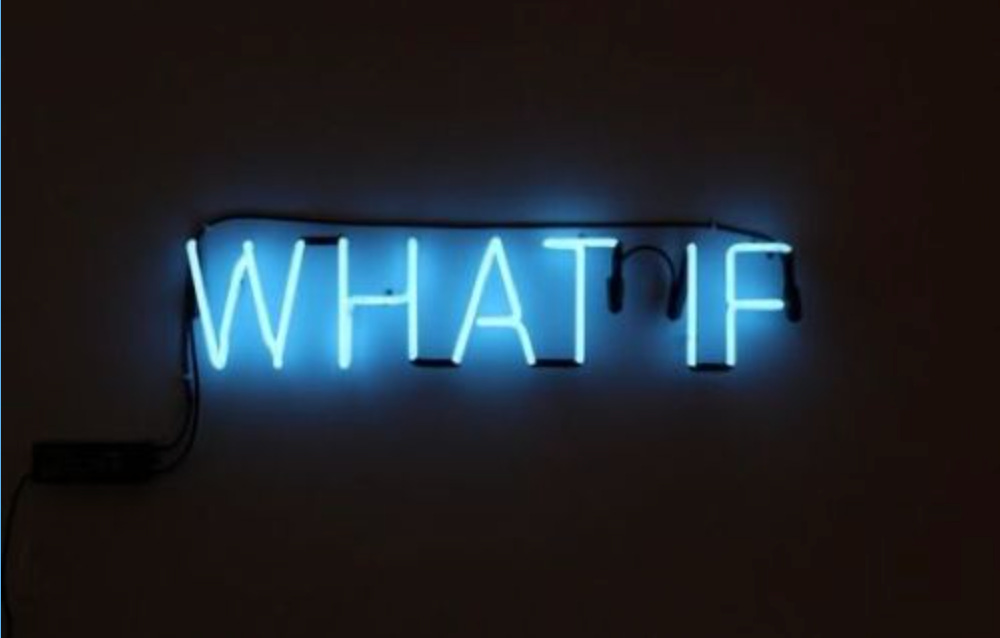
I won’t spoil the whole thing, but essentially it’s a classic second-chance romance trope: as young lovers, they planned to run away together, but something got in the way. They parted ways and chose different paths, and now as adults are confronted with the “what if” of it all.
The scene my tattoo references is a conversation between Benjamín and Irene as adults. Both single again, Benjamín is convinced that the time is right for them to give their relationship another shot. He pleads with Irene to remember how good and right it felt between them when they were young, and how it can feel that way again if she gives it a chance. She pushes back, insisting that they have grown and changed too much to return to the romance they once had. “Fue otra vida,” she says, dismissing him. It was another life. But Benjamín remains steadfast. “No fue otra vida,” he insists. “Fue esta.” It wasn’t another life. It was this one.
The winding paths we take—the choices we make, the things that happen without our permission that, unseen and unheard, saw branches off the fig tree—belong wholly to us. Just because our lives don’t follow the exact lines we plot for ourselves doesn’t mean that they’re wrong, or that they exist out of time.
I got that tattoo because I found myself suddenly in a life that no longer felt like it belonged to me. I had somehow gone off the path, and was in the woods. I needed a reminder that even during the months and years that seemed like a dark night of the soul or a death march through a foreign desert, that my steps were still mine. That the past could not be taken from me, and the future wasn’t something I was ever meant to own.
“Perhaps it’s true that things can change in a day. That a few dozen hours can affect the outcome of whole lifetimes. And that when they do, those few dozen hours, like the salvaged remains of a burned house—the charred clock, the singed photograph, the scorched furniture—must be resurrected from the ruins and examined. Preserved. Accounted for. Little events, ordinary things, smashed and reconstituted. Imbued with new meaning. Suddenly they become the bleached bones of a story.”
-Arundhati Roy, The God of Small Things
I write a lot about being trapped by the loops of the past, seeing the circles and patterns like an underpainting. But underpaintings aren’t the picture we see. They’re a base layer, nothing more. What matters is the image that comes out on top.
Trying to move forward while tracing the wheel of the past is like trying to breathe inside of a tornado. I love and resent and mourn and forgive all the circles that brought me here, but I can’t live inside them. I can’t keep walking backwards through the doors of empty rooms. I am trying to see a bigger, more truthful picture.
I’m 32 now and waist-deep in dead figs. That’s okay. I can still feel my feet on solid ground underneath.
When one door closes, another opens. And when I open the next door, I’m locking it behind me.
Another heartfelt story of your life expressed in authenticity. Of course, you’d see the ex you were yearning for, perhaps bc he would seem like an easy way to move forward, but instead turned out to be someone you were much better without. Your world seems so full of sadness, yet you write and share and provide insight on what it takes to move on. Surely, soon there will be a happy space to write from and find peace ☮️